
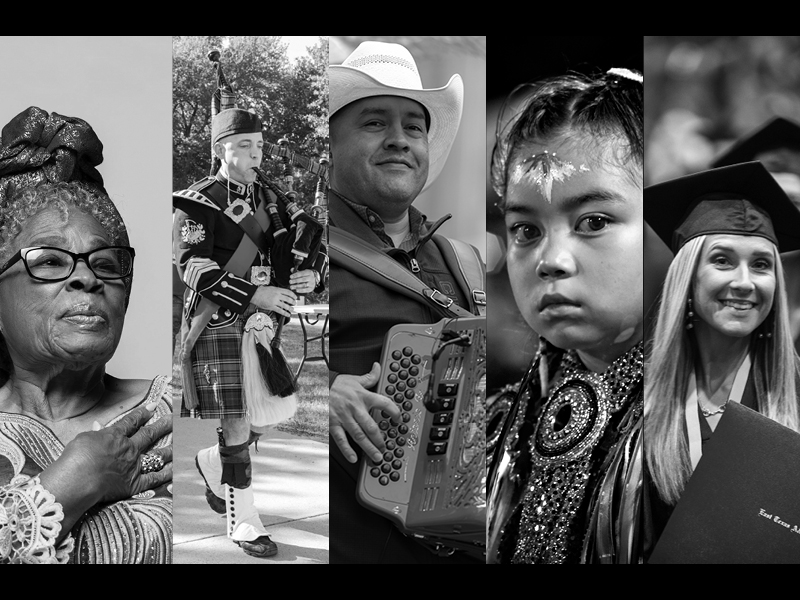
The View from the Upper East Side of Texas
“We hold these truths to be self-evident, that all (humans) are created equal,
that they are endowed by their Creator with certain unalienable Rights,
that among these are Life, Liberty and the pursuit of Happiness.”
Declaration of Independence
By P.A. Geddie
The long-awaited celebration of America’s 250th birthday is upon us with the main events taking place on July 4, the anniversary of the signing of the document declaring independence from a restrictive British government as the United States of America (USA) became the “Land of the Free and Home of the Brave.”
It was indeed a brave undertaking for the colonists to establish a country where all humans are created equal, where citizens have the authority to govern themselves, and everyone has rights to the pursuit of happiness. Aligning with the rule of nature, the concept demands that people live for others, free from arbitrary power and unchecked law.
While the idea is good, and important to hold for dear life, clearly from the beginning some of the European men who wrote the rules didn’t think they actually applied to “all” as they continued to inflict oppression on everyone else including the enslaved, women, Indigenous, and the poor.
Some progress has happened in the last 250 years, but the country is still not living up to its promises.
For Upper East Side Texas and around the country, America 250 is a milestone offering space to review the past through a broadened lens of diverse perspectives, to assess progress, and to orchestrate a future that does indeed give all humans equal opportunities for happiness.
The Land Remembers
“The land holds the stories of all who walk upon it, etched into its soul.”
Native American Proverb
Archeologists say the first humans in Upper East Side Texas were Clovis people, descendants of Asian groups who migrated across a land bridge that became passable between Russia and Alaska as the sea level fell during the Ice Age. Texas holds signs of the Clovis hunter-gatherers from more than 12,000 years ago. Descending from them are the Caddo, who are considered the most prominent Native Americans of East Texas.
Caddo Indians’ lives revolved around sustainable agriculture, hunting, basket and pottery making, and complex communal work. The Caddo culture was matriarchal. The women held top positions within their villages, and property passed from mother to daughter. Men would leave their own villages to join the community of their women. The Caddo raised corn, beans, squash, and other crops. They also hunted bears and deer in East Texas and headed west for annual buffalo hunts.
One of the most powerful Caddo settlements was in the present-day Caddo Mounds near Alto, about 30 miles west of Nacogdoches. The Caddo Mounds State Historic Site has several ancient burial mounds, gardens, walking trails, and a visitor center with detailed exhibits and programs outlining their history. It is a sacred ceremonial place for today’s Caddo Nation. Other signs of Caddo living are present throughout the region, most notably through archaeological digs discovering Caddo pottery.
Other Native American tribes lived in East Texas, including the Alabama-Coushatta, Shawnee, Delaware, Kickapoo, and Cherokee. There were major skirmishes with invading Apaches and Comanches.
The Native Americans lived thousands of years all over the area before the Europeans began arriving. Major conflicts saw all but the Alabama-Coushatta forced out of the region by the late 1800s.
Texas is distinct as the only state to have operated under six distinct national flags: Spain, France, Mexico, Republic of Texas, Confederate States, and the USA. Nacogdoches, the oldest town in Texas, is named for the Caddo tribe that lived there. Besides the well-known six flags of Texas, in Nacogdoches, three additional flags were raised during various rebellions in the 1800s.
Spain was the first European power to lay claim to Texas, along with what is now Mexico and much of the western half of what would become the United States. For 300 years, from 1519 to 1821, the Spanish ruled. They got along with the Caddo. The name Texas originates from the Caddo word “taysha,” meaning friend or ally. Spanish explorers adopted this term, translating it to Tejas to describe the Caddo people and region before it later evolved into the English spelling, Texas.
France attempted to expand its base from French Louisiana among the Spaniards and Natives in Texas from 1685 to 1690.
Mexico freed itself from Spain in 1821, claiming parts of today’s Texas.
By 1836, the growing number of Anglo settlers rebelled against Mexico’s rule, and Texas became its own nation, the Republic of Texas, until it joined the United States in 1845. This period forever marked the Lone Star State as a trailblazer, blending European cultures into a new identity.
Melissa Fulgham, Ph.D. is a history professor and division chair of the Humanities & Social Sciences department at Northeast Texas Community College. She says the United States didn’t invite Texas to join it for many years.
“For a long time the U.S. won’t accept Texas because it’s a hot potato,” she says.
Sixteen years after becoming a USA state, Texas aligned with Southern Confederate states in the Civil War to protect its agricultural economy, which included the abhorrent institution of slavery. That ill-fated attempt lasted from 1861 to 1865.
Since 1865, Texas has kept in step with the rest of the United States of America, although always with its own unique personality.
The Promise
“When it can be said by any country in the world, my poor are happy, neither ignorance nor distress is to be found among them, my jails are empty of prisoners, my streets of beggars, the aged are not in want, the taxes are not oppressive, the rational world is my friend because I am the friend of happiness. When these things can be said, then may that country boast its constitution and government. Independence is my happiness, the world is my country and my religion is to do good.”
Thomas Paine, Rights of Man
European dominance in the country over Indigenous and other populations had a lot to do with their having more advanced writing systems, Fulgham says.
“The cultures that had a writing system (writing, printing, sharing) could defeat the ones that didn’t. People gain more knowledge. They have books.
“The printing press is the second most important invention in world history,” Fulgham says. “The first is the wheel.”
The Europeans were well-skilled and equipped with both.
Having had printing presses since the 1400s, that technology was used in the new country to their advantage. The first press in America was in Massachusetts in the 1700s. By the time of the American Revolution, printers were playing a central role in the development of the 13 colonies.
Thomas Paine’s pamphlet, Common Sense, was widely distributed in early 1776 and is credited with successfully swaying the colonists still pledging allegiance to the British government to join the fight for freedom for the new nation. His writing ignited public opinion against autocratic rule and foreshadowed much of the phrasing and substance of the Declaration of Independence, adopted on July 4, 1776, which states in part:
“When in the Course of human events, it becomes necessary for one people to dissolve the political bands which have connected them with another, and to assume among the powers of the earth, the separate and equal station to which the Laws of Nature and of Nature’s God entitle them, a decent respect to the opinions of mankind requires that they should declare the causes which impel them to the separation.
“We hold these truths to be self-evident, that all men are created equal, that they are endowed by their Creator with certain unalienable Rights, that among these are Life, Liberty and the pursuit of Happiness. That to secure these rights, Governments are instituted among Men, deriving their just powers from the consent of the governed. That whenever any Form of Government becomes destructive of these ends, it is the Right of the People to alter or to abolish it, and to institute new Government, laying its foundation on such principles and organizing its powers in such form, as to them shall seem most likely to affect their Safety and Happiness….”
The birth of the nation continued to take shape, and the supreme law was established with the writing of the Constitution in 1787. It set the framework for the federal government by defining the rights of citizens and establishing three equal branches — legislative, executive, and judicial — designed to check and balance each other to prevent one branch from becoming too powerful. The Preamble clearly outlines that the people are the government.
“We the People of the United States, in Order to form a more perfect Union, establish Justice, insure domestic Tranquility, provide for the common defense, promote the general Welfare, and secure the Blessings of Liberty to ourselves and our Posterity, do ordain and establish this Constitution for the United States of America.”
Before consenting to live under the new federal government, the American people wanted to enshrine the liberties won in the Revolution. The Constitution was immediately amended with the first 10 amendments, which are called the Bill of Rights. James Madison drafted them on behalf of citizens calling to limit government power and protect individual liberties. Among their demands are freedom of worship, speech, and assembly.
Seventeen more amendments followed over the next 250 years that include abolishing slavery, ensuring voting rights for women and all races, and other rights to protect the people.
250 Years: Progress and Stagnation
“Oh America, how often have you taken necessities from the masses to give luxuries to the classes…God never intended for one group of people to live in superfluous, inordinate wealth, while others live in abject, deadening poverty.”
Martin Luther King Jr.
While the new country promised power to the people, inequities were present from the start. The equality rules seemed to only apply to Anglo men who placed themselves in superior positions to the rest of the humans in the country. Those men developed into a wealthy, massive machine during the last 250 years where an elite few shape political, economic, and social systems to serve their own interests, with little regard for the welfare of most Americans.
Armed with the Constitution, citizens today continue to fight for equal rights for everyone else, the struggling masses, however slow the progress may be.
Professor Fulgham says power shifting away from a monarchy or dictator-led government to citizens being directly involved in decision making has been happening for quite some time.
“Over and over, power is shifting away from the king and down to the average person,” she says. “Government is not a gift from the king; it is the people.”
The hypocrisy of the USA founders highlighting the importance that “all men are created equal” in their fight for freedom, while they themselves continued to inflict oppression on everyone else, is not lost on most.
“It’s the great paradox,” Fulgham says. “If you put this in a larger world historical context, you see there’s a long pattern of giving more and more power to the people.”
She cites the Magna Carta from the year 1215, a document forced upon England’s King John by barons to limit his powers; and in the 1680s, Parliament limited the king; and the French Revelation of 1789 declares the rights of man.
“The words create a set of ideas intended to eventually get themselves included.”
Martin Luther King Jr. famously called the Declaration of Independence a promissory note, a sacred promise that all humans are guaranteed the unalienable rights of life, liberty, and the pursuit of happiness.
“The words are there with this promise made in 1776,” Fulgham says. “Martin Luther King was fighting for it to be honored. There’s power in the words.”
Fulgham tells the story of an enslaved woman in Massachusetts in 1781 who heard the words that all are created equal and knew they should apply to her. After living 30 years in slavery, Elizabeth Freeman (also known as Mum Bett) went to court fighting for her freedom and won. That set a legal precedent for abolishing slavery in Massachusetts in 1783, long before the rest of the country, as they recognized slavery was incompatible with the concept.
“Regardless of the intent, the words are out there,” Fulgham says. “The tools are there to use to extend freedom as we have over the last 250 years. It set the idea in motion, and we can use it to keep it in motion.”
In the United States, the Constitution and amendments keep progress moving forward.
“What’s happened over the last 250 years is that our amendments have moved citizens from indirect to more direct participation. The people have more of a voice in the government.”
She notes that the 17th Amendment gave citizens the right to vote for senators; prior to that, a select few appointed them.
The 15th prevents the government and states from denying a citizen the right to vote based on race, color, or previous condition of servitude (slavery).
The 19th says women can’t be prohibited from voting.
“Race, gender, age, was up to the states before the amendments,” Fulgham says. “Over time, states arbitrarily limited voting to certain groups. The amendments prohibit them from doing that.”
Government bureaucracy is daunting to some citizens. As a result, many don’t always know their rights and feel powerless.
“We have more power than we think,” she says. “All these amendments give people rights. I encourage every citizen to read all seven articles (of the Constitution) and all 27 amendments.”
“Be not afraid of growing slowly; be afraid only of standing still.”
Chinese Proverb
Builders of a Brave New World
“The purpose of life is to live it, to taste experience to the utmost, to reach out eagerly and without fear for newer
and richer experience.”
Eleanor Roosevelt
While monitoring the rights promised to them, America’s people didn’t sit back waiting for change. They built the country. Each generation accomplished good things worth celebrating. Besides abolishing slavery and giving all races and genders voting rights, there are improvements in poverty reduction, civil rights, women and non-Anglo men in leadership roles, life expectancy, major infrastructure development, and a lot of innovative technology that makes for a better quality of life for most Americans.
Most notably surfacing in the last 250 years are the conveniences of electricity, indoor plumbing, heating, and air conditioning, which were all part of most households by the mid-1950s. Innovations over the decades include the beloved coffee pot, zippers, roller skates, elevators, typewriters, telephones, cameras, and in more recent years, computers, drones, and cell phones with texting, gaming, and photography capabilities that are carried almost constantly in the hands of most humans today.
Transportation developed from the steamboats and trains of the early 1800s to the airplanes and automobiles of the early 1900s. And by 1981, the first reusable spacecraft launches and space exploration advanced over the decades. NASA’s most recent successful return to the moon and back with Artemis II happened this spring with a diverse crew including the first person of color and the first woman assigned to a lunar mission.
Since 1776, mass communication methods have expanded from printed newspapers and books to the appearance of radio in the 1920s. More than 80 percent of households had a radio by 1940, and most tuned in regularly for entertainment programs and important news. It was particularly popular when President Franklin D. Roosevelt started his “fireside chats” on the radio to quiet public fears about the economy and World War II. Television broadcasting significantly upped the media experience with video images. Most Texas homes had televisions by the mid-to late 1960s. The invention and expansion of the internet in the 2000s opened up massive new viewing opportunities, and Americans continue to weigh its benefits versus the harm it causes with its unregulated dissemination of often false information.
The transition from traditional, trusted editor-driven media bound by journalistic integrity, to a digital system dominated by tech giants with social media algorithms and greedy corporate owners, led to rampant spreading of misinformation, making it imperative that people are extremely diligent in choosing their sources for both news and entertainment.
Cultural Blends Create Unique Texas Identity
“Live in harmony, for we are all relatives.”
Native American Golden Rule
Texas’ location between the Western prairies, the South, and Mexico, combined with many cultural influences including those of Natives, immigrants, and pioneers with origins in Germany, Scotland, Ireland, Spain, Africa, and Asia, creates a distinct identity for the Lone Star State. These cultural blends are clear in cuisine and agricultural methods, architecture, music, and the state’s brave and independent spirit.
“Texas is not a melting pot — it’s a hybrid,” Fulgham says. “This is what gives it its unique identity. It’s the only state that has the agricultural economy of the South, the cattle culture of the West, and the Spanish architecture and heritage of Mexico.”
The languages of different cultures are still used in Texas, most notably among Hispanics, but others as well. Names of places in Northeast Texas conjure many cultural heritages of the region including Caddo Lake, Kickapoo Creek, Cherokee County, Neches River, Lake Tawakoni, Nacogdoches, Alto, Angelina River, Sabine River, Arp, San Augustine, El Camino Real de los Tejas, Tenaha, Alba, Douglass, Naples, Paris, Athens, New Boston, New York, New London, Pittsburg, Atlanta, Kildare, Mission Tejas State Park, and Blarney Stone Street (Tyler).
The cowboy culture frequently connected to Texas’ tough, determined, independent identity comes from Spanish influence.
“Everything ranching is actually Spanish; all the cowboy culture — the gear, the words,” Fulgham says.
The Mexican herdsmen were called vaqueros, which became “cowboys” in English. Bronco is a Spanish word meaning wild, which is what they still call untamed horses. Lariat came from la reata, meaning the rope used for handling cattle. Chaps is the shortened term for chaparreras, the leather pants used to protect riders in thick brush. Even the word ranch is derived from the Spanish “rancho.”
The Mexican cowboys’ sombreros and similar wide-brimmed hats influenced the popular cowboy hats and boots worn today. Boots originally were designed to fit in the stirrup and protect legs from thorny bushes and snakes.
Cowboys came from diverse backgrounds. Besides the Mexicans, the developing cowboy life included those of African descent and Native Americans, as well as European settlers. Cattle drives became popular in the 1800s as men herded livestock from Texas into other parts of the country. Many East Texans owned or worked on ranches and joined the drive efforts along trails mostly on the west side of the state where the terrain was less forested.
While cattle drives are no longer part of Texas life, cowboy culture is evident throughout Upper East Side Texas today, with horse and cattle ranches dotting the rural countryside along with other agriculture environments. Rodeos, trail rides, and dude ranches provide authentic experiences, and just about every small town has at least one shop ready to get a customer into a pair of boots, a hat, and other Western attire.
Campfire songs along the cattle trails contributed to Texas’ music scene, along with many other cultural influences. The banjo originated in Africa and was integral to early Texas string bands along with fiddles that came from Africa as well as Scottish and Irish cultures. Western swing was born in Texas, incorporating elements of country, blues, pop, big-band jazz, and Latin rhythms. Conjunto combines traditional Mexican music with the accordion and waltzes and polkas from German settlers. Tejano broadened that sound with pop, rock, and electronic elements like brass and synthesizers. Zydeco comes from French and African descendants with elements of rhythm and blues. Country music was born from a cross-fertilization of European folk songs and African influences.
The Upper East Side of Texas has deep roots in music and has given birth to an incredible number of successful musicians. Some music genres born or practiced in the region still have very clear lanes, while others are a blend. Most music styles developed from combinations of sounds, including boogie woogie, jazz, blues, ragtime, rock and roll, Celtic ballads, Appalachian folk, country, and gospel. Genres and styles continued to develop, brought by waves of immigration and neighboring traditions from Mexico. Over the last 30 years, the term Americana came into mainstream media and in jam sessions across the country as singer-songwriters tired of trying to fit their styles into any one genre.
Leading the way in cultural heritage through music in Upper East Side Texas are ragtime composer and pianist Scott Joplin; folk singer Huddle “Leadbelly” Ledbetter; gospel musician Stuart Hamblen; ragtime’s Henry Thomas; blues legends Aaron T-Bone Walker, Omar Shariff, and Floyd Dixon; followed by pop crooner Johnny Mathis; country stars Ray Price, Tex Ritter, Jim Reeves, Johnny Horton, Johnny Gimble, Lefty Frizzell, Bob Luman, and Al Dexter; classical music’s Van Cliburn; and rock’s Don Henley.
In more recent years, popular musicians from the region include ZZ Top, Stevie Ray Vaughan, Jimmie Vaughan, Billy Joe Shaver, Michael Martin Murphey, Lee Ann Womack, Linda Davis, Neal McCoy, and newer superstars Miranda Lambert, Kacey Musgraves, Sunny Sweeney, and Chris Tomlin. Other music-related talent sprang from Upper East Side Texas as well, with lyricists, composers, and famous venue hosts including Kenneth Threadgill, Will Jennings, Susanna Clark, and Blake Neely.
Marshall, Texas, was officially designated as the Birthplace of Boogie Woogie in 2010.
Besides some of these incredible musically inclined humans becoming national and international stars, the region has seen the emergence of hundreds of local talented musicians and singer-songwriters. Over the years, more and more music venues, open mic stages, and restaurants featuring music nights emerged, giving them a place to showcase their talents for residents and visitors alike.
Jamborees, fiddle fests, seasonal and weekly music series, street jams, concerts, and music festivals are regular happenings in the region.
“Do not be dismayed by the brokenness of the world. All things break. And all things can be mended. Not with time, as they say, but with intention. So go. Love intentionally, extravagantly, unconditionally. The broken world waits in darkness for the light that is you.”
L.R. Knost
Perhaps because of its eclectic hybrid personality, imagination runs rampant in Texas, making it a breeding ground for creativity. In addition to the musicians and songwriters, Upper East Side Texas is home to thousands of talented people in theatre, dance, and various forms of entertainment and visual arts. In the last 25 years, the number of galleries, art centers, museums, and organizations has grown significantly. Art exhibitions are continuously held in the region, and arts organizations offer shows, classes, and other arts-related events regularly. This past year, a few Caddo artists revived some of the traditional arts, including basket weaving and pottery, bringing the art forms full circle.
Architecture styles in Upper East Side Texas include heavy influences of French, Greek, Roman, British, German, Italian, and Roman design, including Beaux Art, Art Deco, Second Empire, Victorian Gothic, Greek Revival, Classical Revival, and Spanish Colonial. Those designs blended with Craftsman bungalows, log cabins, dogtrot homes, and many other styles developed in the last few decades.
Nowhere is the fusion of cultures more apparent than in Texas food. German wiener schnitzel became chicken fried steak, and in East Texas that means the meat is dipped in egg and flour before frying and then smothered with white gravy.
French influence remains in East Texas cuisine in the form of Cajun dishes like gumbo and crawfish boils that take place in restaurants and at special events throughout the year.
French almond pralines merged with native Texas pecans, eventually leading to a favorite dessert recipe called pecan pie.
The culinary legacy of the South had a significant influence on Texas cuisine, especially in East Texas where saucy barbecue, fried chicken, and sweet tea are part of the fabric of life.
Barbecue today is a blend of German and Czech meat market smoking techniques and Southern, Spanish, and Native American open-fire cooking, paired with the booming Texas beef industry. The process made meats like brisket more tender and palatable. East Texas barbecue is a little different from what is found in Central and South Texas, with more influences from those of African and Creole descent who are responsible for much of the region’s Southern cuisine. Besides beef, East Texas barbecue aficionados cook chicken and pork — ribs are particularly popular — using similar dry rub spices and tomato-based sauces.
Cattle ranches remain a source of income for many in the region, mostly small herds often vital to local community economies.
Farming has long been a mainstay of the Upper East Side of Texas with its history going back to the Caddo’s early reliance on corn, beans, and squash. The region has a rich history with cotton, grains, syrup, fruits, vegetables, and meats. Residents take their appreciation for local ingredients to a Texas-sized level. Farmers’ markets today provide easy access to seasonal fresh foods and often include breads, preserves, eggs, and hand-crafted items. Face-to-face interaction with farmers gives shoppers a chance to ask about their process, ensure organic practices, and get helpful tips for storage, preparation, and cooking.
Many settlers in this rural region were farmers and ranchers into the 1900s. After World War II, many moved to the larger cities for work and began focusing on higher education to get the best jobs.
Higher education trade schools, colleges, and universities sprang up around the region as early as 1849, offering citizens a way out of poverty and opportunities to follow their dreams and improve their quality of life. Several institutions like Wiley College in Marshall (1873) and Jarvis in Hawkins (1912) helped Black youth pursue higher learning. Other higher learning institutions were established in communities across the region, with more than 25 in operation today, some of those with multiple campuses.
Scholarships and other financial aid help fund higher education, but many families found them out of reach for various economic and social reasons. Women, for instance, were still being discouraged from higher education well into the 1960s and 1970s, and often still are.
Many colleges today offer zero tuition and other initiatives to help make college possible for low-income students, particularly over the last decade. Public school systems often partner with colleges to get students thinking about higher education from kindergarten through high school.
East Texas colleges and universities are now experiencing record growth in enrollment and graduates with degrees, many of them the first in their families to do so.
Dr. Fulgham says at Northeast Texas Community College near Mount Pleasant, much of the increased enrollment has to do with dual-credit programs that allow high school students to take college-level courses while earning their high school diplomas. They used to announce those students during public events, but the number of dual-credit enrollees has increased so significantly that they’re not able to do that anymore.
She points out that the Texas Education Agency’s 60×30 plan is helping with incentives for at least 60 percent of Texans age 25 to 34 to have a certificate or degree by the year 2030.
Education for youth and adults remains a high priority for many to boost quality of life and the regional economy. Numerous programs are actively in place to increase employment opportunities and promote economic growth. The rising opportunities for remote working situations are ideal for those who want to live and work among the natural beauty and low-traffic areas of Northeast Texas. While internet capabilities are challenging at times, broadband internet expansion remains a top priority.
Among growing industries, tourism provides an economic boost as visitors look for the small-town and cultural district experiences so prevalent in the region.
United We Stand, Divided We Fall
“Nobody wins unless everybody wins.”
Bruce Springsteen
Ancestors of the Native tribes and those who descended from Africans, Mexicans, and Europeans are living and working in Upper East Side Texas today. They are joined by thousands of others who came to the region over the last few decades, including many from the Philippines, India, and Vietnam. The region is surprisingly diverse and becoming more so every year.
“The area has had huge demographic shifts,” Fulgham says. “There are pockets of different cultures all over the region. There’s large Hispanic growth in some areas where you’ll hear Tejano music playing in stores.”
She says that with all the different cultures coming to the area, it usually starts with one finding a welcoming environment, then they bring their relatives and friends, and soon there’s a community.
Just like groups of those descended from Scottish, Irish, German, and other ethnicities who have annual festivals and other celebrations of those cultures, newer immigrant groups form support systems and gather on a regular basis for events representing their traditions.
While many people are moving to Texas, others are moving out, some out of the country as they grow tired of waiting for the promises outlined in the Declaration of Independence. Some are moving back to the very parts of the world their ancestors left behind.
Fulgham said historically there’s always been a back-and-forth flow of people coming and going as they seek to improve their quality of life, and urges any who are feeling powerless to start with local leadership.
“Get involved at the local level,” she says. “That’s where the actual, real power is that shapes everyday life. It’s your city council that determines what businesses come in, what incentives are allowed, and makes decisions that impact how people feed their families.”
Cities, states, and nations are judged by how they treat their people. Respecting differences and appreciating human commonalities are key in the pursuit of happiness. Often standing in the way are the “divide and conquer” tactics long used by those in power to control and avoid accountability. Citizens win when they band together; when there is no “us versus them” among the people. Citizens win when they work together and hold elected officials accountable to live up to this country’s promise that all humans are created equal and all are deserving of life, liberty, and happiness.
A celebration of America 250 is a perfect time to find gratitude for the progress made and renew a commitment to equal rights for all of humanity.
Looking at the past through a narrow perspective is not the whole truth. “Broadening the narrative” is a term historians are using frequently in recent years as they focus on expanding perspectives to better understand a more complete story.
Professor Melissa Fulgham uses the advances in photography as a metaphor for how historians are going beyond old, typical interpretations of the past in order to build a better future.
“Like old-time photography, we only got a snapshot of one area,” she says. “Today, with our phones and video capabilities, we can scan 360 degrees. That’s what we’re trying to do with modern history. Where people can find themselves in the story, regardless of their background. History is the story of people. People from different ethnicities, social standing, and education levels helped create the world we are in today. We’re reconnecting the past, and these choices help shape the future.”
“Learn from yesterday, live for today, hope for tomorrow.
The important thing is not to stop questioning.”
Albert Einstein
SOURCES: Melissa Fulgham, Ph.D., Northeast Texas Community College; Texas Almanac; The Portal to Texas History; and Texas State Library and Archives Commission

