
Find History and Creativity at Every Turn in Van Zandt County
By P.A. Geddie
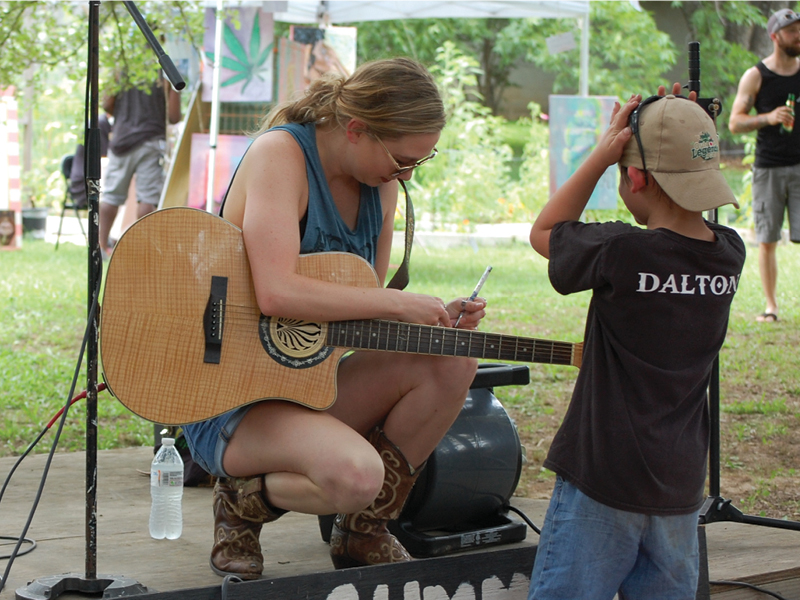
Van Zandt County is named for early Texas settler Isaac Van Zandt. More famous in recent years is his four-times great-grandson, the late Townes Van Zandt, often referred to as the most influential Texas songwriter of the twentieth century. A Tribute to Townes Van Zandt takes place in the county each year in early March around his birthday with local singer-songwriters and special guests performing their favorite Van Zandt songs.
Several towns in Van Zandt County — surrounded by lovely countryside and authentic attractions — are popular travel destinations.
Canton is the county seat and home of the “World’s Largest Flea Market.” First Monday Trade Days takes place four days every month, not a one of them a Monday. Dating back to 1850, people gathered around the courthouse square on the first Monday of the month to see the circuit judge, gather needed supplies, and watch court proceedings. People brought their livestock, produce, and farming equipment to sell or trade while in town.
Eventually, the buying and selling activities expanded, covering hundreds of acres in the downtown Canton area. The shopping moved to the four days prior to the first Monday to better accommodate weekend travelers. Today, an estimated 100,000 shoppers visit more than 6,000 vendors each month, finding home decor, antiques, collectibles, jewelry, clothing, and unusual gift items.
Beyond its world-famous flea market, Canton has a charming downtown center, ample shopping and dining experiences, attractions, and fun things to do regularly, and it hosts annual events that rival any small town in America. Once the trade days’ crowds subside, Canton settles in to anything but a sleepy little town. Those who prefer shopping at a leisurely pace find antiques, furniture, home decor, homemade arts and crafts, jewelry, clothing, gifts, and more in a variety of specialty and retail stores.
Friendly staff from long-standing restaurants serve delicious country cooking, baked goods, barbecue, fried pies, catfish, steaks, as well as Italian, Mexican, and Chinese dishes.
Area attractions and outdoor adventures include museums, historic sites, golf courses, a seasonal playland, a veterans memorial, a water park, and pickleball courts. Several community parks offer playgrounds, scenic lakes and walking paths, pier and bank fishing, swimming, and picnic areas. Canton is a state-designated Walking Capital of Texas because of the miles put on by shoppers while browsing the 450-acre flea market grounds and recreating at the local parks.
North of town, families enjoy seasonal attractions Yesterland Farm and Splash Kingdom. Golfers find the Van Zandt Country Club. South of Canton, attractions include Rocky Ridge Drive Thru Safari, featuring 25 species of animals on 200 acres. Cannon Creek Vineyard makes a variety of wines and has a tasting room, and guests are welcome to bring a picnic.
Mill Creek Ranch Resort offers RV sites, cabins, yurts, and cottage rentals, fishing ponds, nature trails, two swimming pools, paddleboats, and children’s playgrounds.
The Silver Spur Resort has RV sites, cabin rentals, and glamping options. They have an on-site restaurant called Q & Brew with authentic Texas smokehouse-style barbecue along with local craft beers and assorted Texas wines. Amenities include a swimming pool, fishing ponds, and kids’ playground. Escape rooms and other activities take place regularly.
Southeast of Canton is the unincorporated town of Ben Wheeler, the “Wild Hog Capital of Texas.” It is a tiny town packed with live music, good food, wine, spirits, and regular special events. Several hotels and vacation rentals are nearby and Turkey Creek Country Resort with RV sites is downtown.
Folks in Historic Ben Wheeler are used to going hog wild. It is an unincorporated community, and the business owners like it that way. They have their own quirky, casual way of doing things, and visitors come from all over to see why it is sometimes called “One of the Coolest Small Towns in Texas.”
The town is named for Benjamin Wheeler, the first man to carry mail into the area. Its rich history is part of the town’s charm. Restored historic buildings provide an idyllic ambiance to go along with modern culinary and artisanal offerings.
Farmers and ranchers provide fresh ingredients for two restaurants anchoring the town, which are located in the former mercantile and blacksmith shops. A farmers’ market takes place during the summer, and live music happens five days a week in several venues.
The rustic community is also home to boutique stores with clothing, antiques, vinyl records, and gifts. The downtown businesses sit among groves of tall, lush East Texas oak trees, and they take full advantage of utilizing park-like settings throughout the town.
Ben Wheeler is a fun visit any time of the year, but organizers go all out for their annual and pop-up events. With bar stool races, a summer art fair, and the Fall Feral Hog Festival, there is never a dull moment and plenty of room for people of all ages to find their own way to “ham it up.”
Ben Wheeler the postman, a higher education institute, and cane syrup production are topics documented on historical markers in and around town.
Just outside town is an upscale bakery and the farmhouse headquarters of the famous Saxon tomatoes, where guests can take what they need from a roadside stand and put their money in a jar.
White Fox Vineyards sits near the Van Zandt County border on 330 acres. The family-owned boutique winery produces hand crafted local wines on site. They make most of their vintages from estate-grown muscadines and grapes.
Historical markers on the south side of Van Zandt County cover a variety of topics. One subject is a military road and cattle trail between Tyler and Porter’s Bluff that predates Mexican rule. Vestiges of the road are still visible in some locations in Smith and Navarro Counties.
Asbury Cemetery has burial sites going back to 1836 and chronicles pioneers of Van Zandt County. One famous marker there is the First Burial Site of Little Prairie Flower — also called Topsannah — the young daughter of celebrated Comanche captive Cynthia Ann Parker and Comanche Chief Peta Nocona. Prairie Flower was born in 1858 and died in 1863 of pneumonia while living with relatives of her mother. Her remains were later moved to Oklahoma to join those of her mother and her brother, famous Comanche leader Quanah Parker. Cynthia Ann Parker’s story is the subject of many books and has inspired various characters in works of fiction and film, from The Searchers, starring John Wayne and Natalie Wood, to Dances with Wolves, starring Kevin Costner.
In the most southeastern tip of Van Zandt County, is the artists hamlet of Edom. Visitors often find a handful of artists working in their studios. Surrounding Edom are farms with berries, grapes, seasonal produce, and flower gardens. Blueberry Hill Farms is an annual highlight for many during the summer to enjoy picking fresh blueberries. Several daylily and other flower farms are in the area and Blue Moon Gardens is a delightful oasis destination garden center built on a rural homestead. It features more than 20 demonstration gardens, an old farmhouse gift shop, an outdoor kitchen, a vast selection of plants, and a fiber arts studio.
Edom was established in the mid-1800s and, like many small towns that time forgot after World War II, it was nothing more than a dusty spot in the road when the late potter Doug Brown landed there in 1971. He opened Potters Brown, started the annual Edom Art Festival that is still going strong today, and invited other artists to join him. Year after year, artists set up shops along the one-block downtown farm-to-market road that is at the heart of Edom. More than 50 years later, the community is known far and wide for its authentic charm with numerous working artists and galleries adding the spark that makes Edom dazzle.
Folks in downtown Edom sit on porches and enjoy visiting with their neighbors and watching travelers slowly approach the only light in town. The town is a perfect mix of laid-back simplicity and creative energy.
The Edom Historical Museum has relics dating back to wars between Texas settlers and Southern Plains Native Americans and other local history.
The Neches River forms the county line in the southeast corner of Van Zandt County. The river gets its start in the Colfax community and snakes its way 416 miles down to the Texas coast, passing Port Neches and flowing under the Rainbow Bridge into Sabine Lake just before merging with the Gulf of Mexico.
Just west of the Neches River near Edom is a Greek Revival two-story house built in 1852. Now a recorded Texas Historic Landmark called Roseland Plantation, period antiques fill the main house and reported ghost sightings add to its allure.
Heading north along the Neches River, visitors come to the Chief Bowles and Battle of the Neches Historical Site. Sam Houston, the first president of the Republic of Texas, deeded the land to the leader of the East Texas Cherokees, Chief Duwali Bowles. The treaty was not honored by the next president, and a battle ensued. In the summer of 1839, several hundred Cherokees, led by 83-year-old Chief Bowles, met Texas forces in the Battle of the Neches. At dusk on July 16, Chief Bowles and his troops — including Cherokees, Delawares, Shawnees, and other allies — battled the Texas militia soldiers along the Neches River.
Wounded, Chief Bowels sat on the battlefield and a Texan soldier killed him. The State of Texas erected a monument there many years later.
About 100 members of 13 tribes died in this last battle between the Cherokees and Texans. Others claim the losses were much higher. After the defeat of the tribes, most of the survivors fled to Native American Territory in Oklahoma. The land there is now owned and managed by the American Indian Cultural Society (AICS). Each year on the Saturday closest to July 16, they hold a ceremony
honoring those who died in the battle.
North of this site is the small community of Van. The discovery of oil there in October 1929 deemed Van a find of major significance and it became a boomtown. The oil company built a campsite and soon the roads were clogged with incoming trucks and automobiles. Tents and rough board shacks sprang up. Dance halls opened. Beds in the primitive, crowded “hotels” were going for four dollars a night. More than 40 “joints” opened to feed the crowds. Some oil production continues today, but the boomtown is long gone. The Van Area Oil & Historical Museum houses displays such as an old workable corn sheller, sewing machine, postal equipment, surveying equipment, and many oil field tools ranging from wrenches to wooden sucker rods. A celebration of the community’s oil history takes place each year with a parade, car show, food, fun, and museum tours.
Van has a couple of long-standing home-style restaurants enjoyed by locals and visitors alike and several attractions nearby.
North of town is Sky Ranch, a recreational facility offering kids’ camps, family weekend programs, group retreats, and conferences. They have more than 30 individual cabins and lodges, some of which
accommodate up to 80 guests. There are also wide-open fields and a private 90-acre lake.
Red Moon Farm is a 38-acre sustainable agriculture farm operated by Justin and Jessica Bullock, who provide chemical-free food through their community supported agriculture program and at local farmers’ markets.
Valle Della Pace Vineyards & Winery is a family-owned vineyard and winery open Wednesday through Saturday between Van and Lindale.
North of Van is the town of Grand Saline built upon one of the largest and purest salt mines in the nation, with a supply estimated to last thousands of years. Backroads around the “Salt Capital of Texas” are as beautiful as any in Upper East Side Texas. Salt deposits that seep up to ground level attract a wide variety of animals. A salt prairie southeast of town is the center of the deposit in Grand Saline. Once under water, the seas dried up, leaving the salt covered as the earth’s layers shifted and changed. The Caddo used the salt there as early as 800 CE and the Cherokee used it until 1839.
Grand Saline rolls out the “white” carpet to visitors throughout the year and takes every opportunity to honor its salty roots. Every summer, the community celebrates with four days of food, fun, and entertainment.
During the Salt Festival and throughout the year, visitors and residents alike enjoy a trip to the city’s claim to fame — the Salt Palace Museum, the only building in the United States made of pure rock salt. Inside the Salt Palace is a museum featuring photos and memorabilia of the salt industry dating back to 1845, and the rich history of Grand Saline and its citizens. On display is the history of native son and pioneer aviator Wiley Post with photographs and a small model of his famous plane “The Winnie Mae.” Post set two world records by circling the globe in the aircraft in 1931 and 1933. Music performer Chris Tomlin also hails from Grand Saline and a display in the museum keeps up with his roots and success.
Other sites to see are the old depot station, now serving as a public library, and a caboose, which tells the story of the Short Line Railway used in the early 1900s to bring coal to the salt works.
U.S. Highway 80 goes through the north side of Van Zandt County, running parallel to the Union Pacific railroad tracks and connecting Grand Saline with Fruitvale, Edgewood, and Wills Point. Once part of the early auto trail known as the Dixie Overland Highway, the road originally ran from the Pacific Ocean to the Atlantic Ocean. The area of U.S. Highway 80 west of Dallas is now decommissioned and what remains is a route splitting off from Interstate 30 in Dallas all the way to Savannah, Georgia. Besides Van Zandt County in the Upper East Side of Texas, U.S. Highway 80 runs through Wood, Kaufman, Upshur, Gregg, and Harrison counties before entering Louisiana. Twice a year, a giant Hi-Way 80 Sale takes place with vendors set up along the road across Upper East Side Texas.
In Edgewood, visitors find the Heritage Park Museum of East Texas. Covering three city blocks, the site encompasses more than 20 authentically restored and furnished structures representing rural life in East Texas from the 1800s to the 1920s. Special events take place throughout the year and an annual heritage festival is held every second Saturday in November.
Wills Point is a charming little town known as the “Bluebird Capital of Texas.” There are several noteworthy historical landmarks in Wills Point, including the Rose Monument in a downtown intersection, the Texas and Pacific Railway Depot, a train caboose, and Wills Cabin. The town is close to Lake Tawakoni State Park and the award-winning Four Winds Steakhouse.
Van Zandt County offers plenty of fun and meaningful things to do throughout the year. Check with each towns visitor website and make a plan to visit.
Excerpts of this article come from the book, Upper East Side of Texas: Small Towns and Cultural Districts. The book contains more than 300 photographs and commentary on the history, scenery, art, and agriculture of the region. Go to www.SpeckledCrow.com to find it in shops or on Amazon.

