
By Ann Bush
Tis the season for feeding backyard birds all across America. Last year Texas experienced one of the coldest winters in history with brutal winds and freezing temperatures staying for many days. Birds stash and store seeds during the summer to carry them through the winter; however Texas birds are rarely prepared for extremely cold or long winters.
Based on information from the National Audubon Society, the Cornell Lab of Ornithology, and various bird watching magazines, here are a few backyard bird feeding tips.
Feeders
Chose feeders according to what bird you want to attract to your yard or need to feed. Placement is especially important and feeders should be at the same level as in the bird’s natural habitat. Keep larger birds away from smaller birds so they do not have to compete for each little morsel.
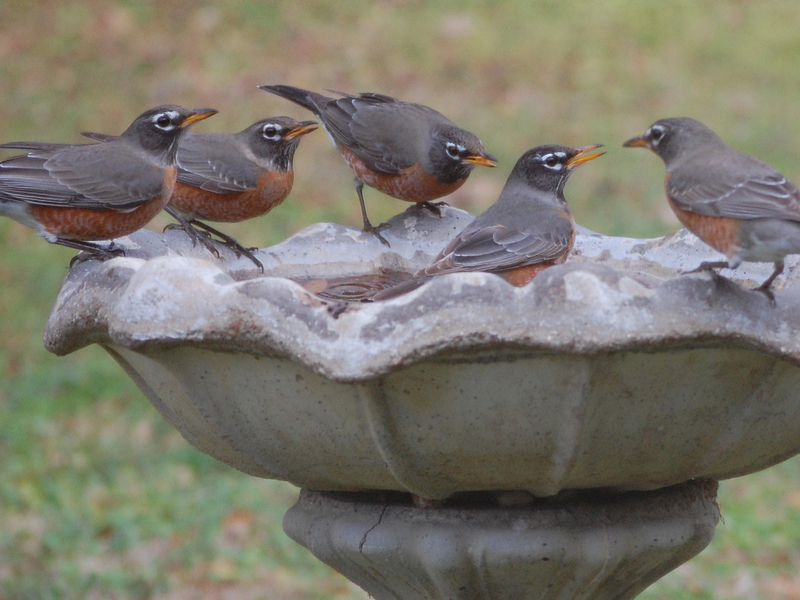
Commercial feeders are not always necessary as food can be placed in any type of container that has good drainage, such as an old log, a chipped pottery piece, a cracked leaky bird bath or a slightly slanting table top. A straw hat with the brims pulled up with wire or a pie pan snuggled inside a hanging planter can be used and hung in front of a window. Peanut butter can be speared on a tree trunk and poked with sunflower seeds. Birds are easily pleased as long as the food is good for them.
Black-oil sunflower seeds
Almost any bird that visits a bird feeder will eat black-oil sunflower seeds. The outer shell is thinner and easier to crack than other types of sunflower seeds. Birds that are too small to crack the shells will scour the ground for fallen seeds. The kernel inside is the largest of all the sunflower seeds, giving the bird more nutrition for their effort. Most farm supply stores or feed stores carry them.
Peanuts
Woodpeckers, jays, nuthatches, chickadees, and titmice love peanuts that provide a high-energy, high-protein diet. The peanuts must be un-salted and de-shelled because the shells are tough and too much energy is consumed to find the nut. Peanut manufacturers have identified the bird feeding market as a good place to get rid of peanuts that are broken or otherwise unfit for human consumption. Ask for peanut bits at feed stores or retailers.
Thistle Seed
Nyjer, or thistle seed is consumed by small finches such as goldfinches, house and purple finches. These small little birds are often intimidated by larger birds and will not visit a feeder where thistle is mixed with other seeds. Thistle seed is best served in a special thistle feeder – commonly a tube feeder or sock with tiny holes. Finches will cling to the sock and pull the little seeds out while larger birds cannot. One problem is that when the sock gets wet, mold may develop inside so it must be inspected often and cleaned.
Safflower Seed
This white, thin-shelled seed is liked by most birds, especially doves and cardinals. Safflower seeds can be added to any large bird feeder with sunflower seeds. Even though doves are ground feeders, avoid sprinkling safflower seeds on the ground since they quickly become soggy if it is raining or a sprinkler is near.
Cracked Corn
Cracked corn is liked by many creatures. Along with sparrows, jays, doves and blackbirds, a few squirrels, deer or raccoons may also visit your yard. Some backyard bird lovers use cracked corn to lure squirrels away from bird feeders. Whole ears of corn are not advisable because the kernels are too big and hard to digest for most backyard birds. Cracked corn is broken up into smaller pieces to safely carry away from competing birds and dried hence the winter rains do not spoil the corn as fast.
Fresh Fruit
Fruit such as grapes, berries, oranges, apples and melon rinds are an important ingredient for a bird’s healthy diet. Fresh fruit is best, however sometimes hard to find in the winter. Fruit is not a good idea to serve in the summer as it draws flies, mosquitoes and bees. But if fruit is available in the winter, birds will love it. Dried fruit such as raisins, bananas or cranberries must be soaked in warm water first to soften them for easy digestion. Fruit is especially important in the early spring for migrating birds, especially tanagers. Orioles crave oranges which can be halved and simply nailed to a tree trunk in the spring and fall.
Suet
Birds in the winter need fat in their diet for a source of energy, and suet is the perfect solution. Suet is rendered fat, and usually mixed with seeds, bits of fruit and nuts. Packages of pre-prepared suet treats can be found in most stores in the garden or pet food section. Suet holders are made of wood and/or wire designed for the birds to hang onto while munching away. Suet is an extremely important source of winter food for woodpeckers and wrens that rely heavily on summer insects for survival.
Mixed Seed
There is much debate about mixed seed products. Often, fillers such as wheat, dyed seeds, red milo for pet birds or millet are mixed with cracked corn and sunflower seeds. Most birds will push out this unwanted food to get to the good stuff, and money is wasted as the unwanted fillers are left on the ground to rot. Read the labels carefully, or buy separate types of food for particular feeders that can be scattered around the yard.
Make Your Own Bird Treats
Cooking for the Birds published by Adventure Publications has many kid-friendly recipes for a nice winter afternoon of fun. Here are a few easy treats to make.
Double-dipped Cone
Ingredients include pine cones, suet, seeds, peanut butter and string. Tie a 12-inch length of string on the pine cone just under the stem. Melt suet at low heat in a saucepan. Hold onto the string and dip the cone into the melted suet. Place on wax paper and immediately sprinkle seeds over the dipped cone, being careful of the hot suet. Let cool and place in the refrigerator. Heat the peanut butter in a microwave until melted, about 3 seconds. Drizzle the peanut butter around the cone. Hang outside when cool and watch the birds dig in.
Raisin-berry Relish
This is a favorite snack for cardinals and cedar waxwings. You will need oranges or ½ cup of orange juice, 1 cup of raisins or currents, 1 ten-ounce package of frozen cranberries and 1 cup of brown sugar. Cut the oranges in half and squeeze their juice over the fruit and sugar. Keep the orange rinds which will be used later. Heat the fruit mixture on medium heat until the mixture bubbles. Turn down the heat and simmer for 30 minutes. When the mixture cools, fill the orange rinds, or if orange juice was used fill muffin tins or tuna cans. Chopped apples and nuts can be added to the cooled mixture.
Zebra Suet-sicles
For this finch, chickadee and nuthatch delicacy, you will need 3 cups of suet, 1 cup of thistle seed, popsicle molds, craft sticks with holes and string. Melt the suet in the microwave and pour into molds up to only one inch high. Sprinkle a thin layer of seeds and place the molds into the refrigerator to harden for about ten minutes. Repeat the steps until the molds are full and place the stick inside the mold. Chill until hard and pop the suet-sicles from the molds. Tie the string through the hole in the stick and place outside for a feathered friend feast.

