
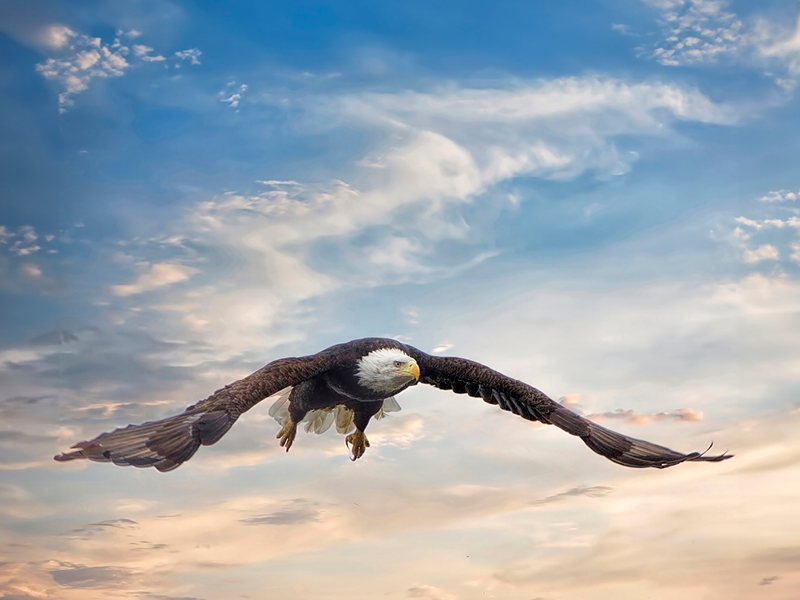
It is the mighty bald eagle that was chosen for the Great Seal of the United States of America during the Second Continental Congress on June 20, 1782, solidifying its symbolic role for the country. It was not officially declared into law as the U.S. National Bird until 2024.
Long before the European settlers claimed the land, the eagle was a deeply sacred symbol for Native American cultures. The bald eagle is unique to North America, representing strength, independence, determination, courage, and freedom to many.
The image of the bald eagle appears on official documents, currency, flags, public buildings, and on other government-related, sacred ceremonial items, and all kinds of art.
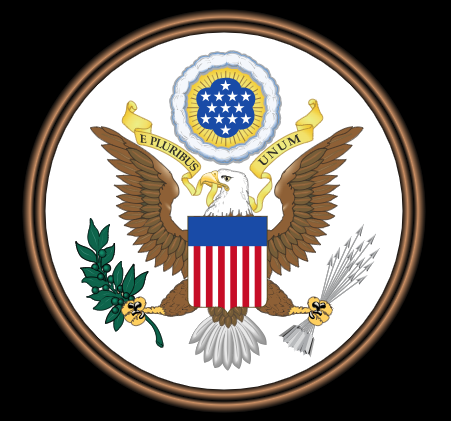
For the Great Seal, its imagery was finalized by Secretary of Congress Charles Thomson from design suggestions by Thomas Jefferson, John Adams, and Benjamin Franklin — plus contributions from two other committees and from Thomson, who chose the American Bald Eagle as the centerpiece of the Great Seal. The Great Seal depicts the bald eagle and the motto, “E pluribus unum” (out of many, one), symbolizing the union of many states into a single nation and representing the idea of a diverse people, with varied cultures and backgrounds, coming together to form a single cohesive society.
Today, seeing a bald eagle soaring across the sky conjures feelings of unity, peace, protection, freedom, patriotism, and a myriad of other emotions as people resonate with this gift of nature through their own lens.

