
By P.A. Geddie
The small towns and cultural districts are the superstars of the Upper East Side of Texas, each with its own unique personality. Standing at the center of many of the communities, people get an immediate sense of the beauty that happens when the reverence of the historical past, the welcoming of contemporary culture, and a partnership with nature converge. That good vibration is the underlying current of the entire region.
At the time County Line Magazine began 25 years ago, many of the small communities were definitely “sleepy towns” and some were bordering on the title of “ghost town.” Over the years, through the hard work of many city employees, business leaders, entrepreneurs, and motivated citizens, there are now well over 30 tourism-worthy and local friendly towns in the region.
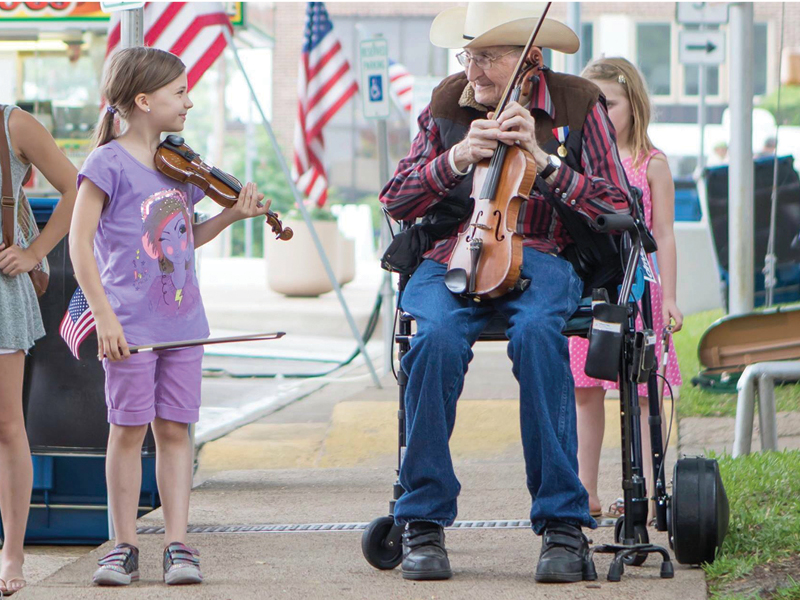
Athens Fiddle Reunion. Photo by Carrie Bennett
The state began a few programs that helped small towns think about revitalization possibilities and offered some funding opportunities. The Texas Main Street program is one of them still going strong.
More of the state’s Main Street cities are in Northeast Texas than anywhere else in Texas. Those include Sherman, Denison, Celina, McKinney, Paris, Greenville, Royse City, Rockwall, Mesquite, Waxahachie, Ennis, Corsicana, Palestine, Nacogdoches, San Augustine, Carthage, Henderson, Kilgore, Longview, Marshall, Tyler, Canton, Grand Saline, Mineola, Winnsboro, Pittsburg, Mount Pleasant, Mount Vernon, Clarksville, Texarkana, and Linden.
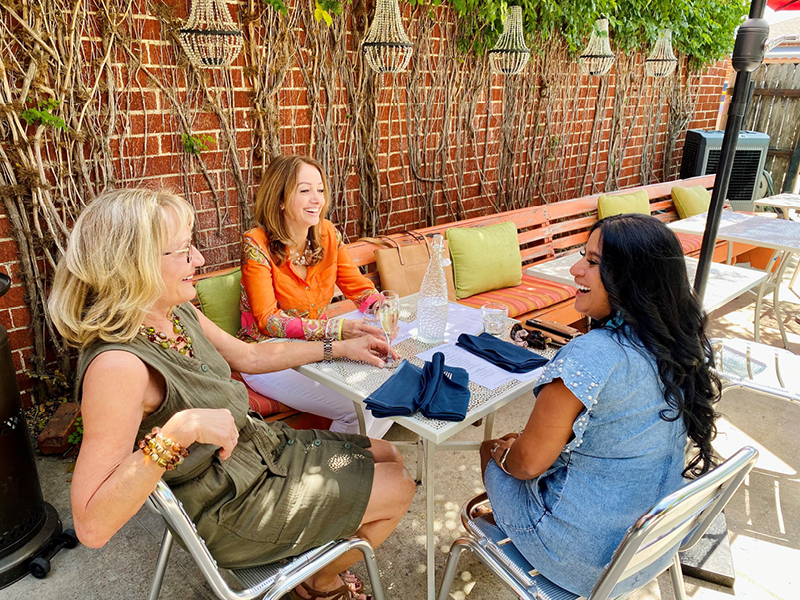
“Shop Local” is a term heard often in rural communities to remind people to support local economy. In a time when large companies like Amazon make it easy to shop online and get quick deliveries, in-person shopping requires conscious thinking and boutiques in the region try to make it an experience worthy of tourists and residents alike. Some offer coffee or champagne as shoppers browse gift shops, antique and thrift stores, art galleries, and home decor, cool curiosities, and other specialty locations.
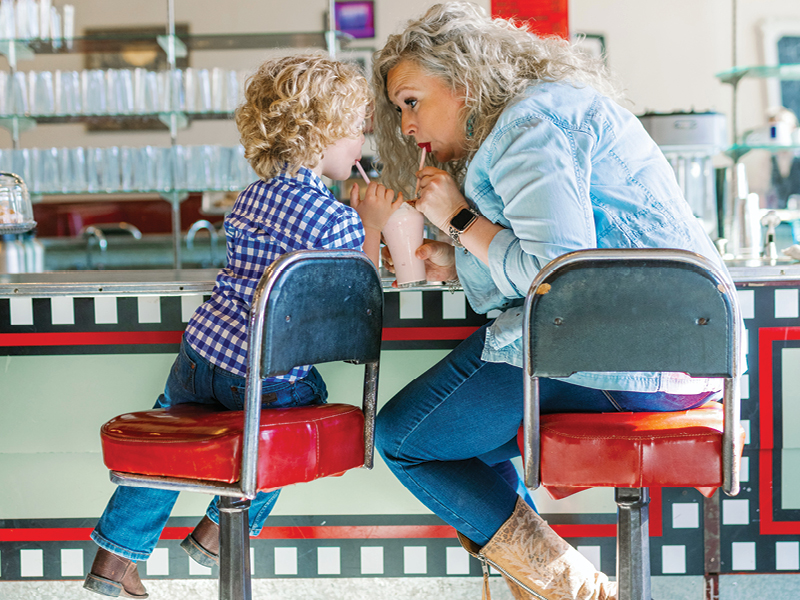
Across the Street Diner, Corsicana,. Photo by Dare To Aim Photography
Most of the small town shoppers are looking for an experience that may involve browsing through the shops, taking a break at a bakery, and enjoying a meal at a local restaurant. These activities are often part of the small town destination getaway package that many look for to escape the high traffic and crowded spaces of big towns.
Rural communities rely on tourism to keep the doors open for small shops. Some are doing a better job of that than others. Visitors have the best experience when they call ahead and speak to local travel specialists who can help them create an itinerary based on their interests.
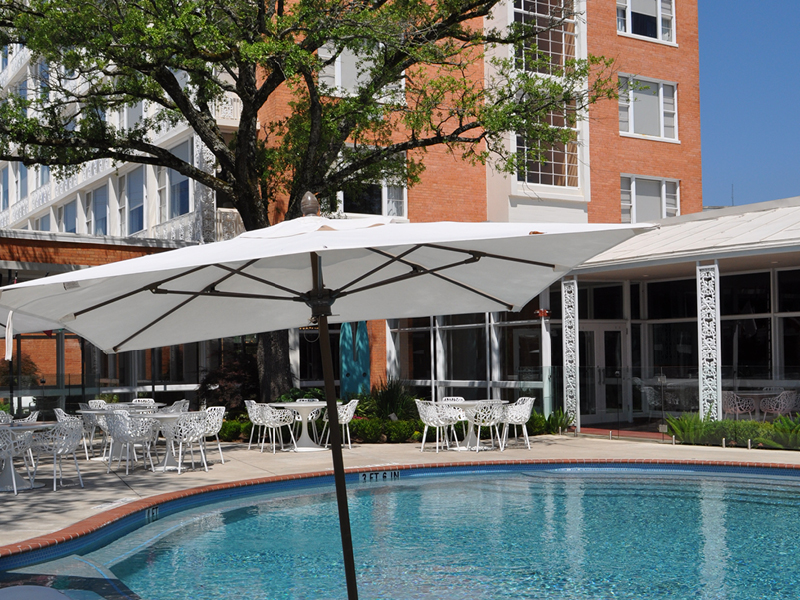
Fredonia Hotel, Nacogdoches, Photo by P.A. Geddie
There are many citizens who grew up in the area and stayed in their small communities and “kept the lights on” who are grateful for the changes that brought them more local shopping and dining opportunities. The same amenities like coffee shops and wineries they now enjoy are also attracting young families, retirees, and others to live and visit the area.
One trend that instigated change in the region is that some people began returning to their hometowns after retiring or to help care for aging parents or to return to a more simple way of life. Many had received higher education by then and gained more “worldly” views and had more expectations for social needs they’d grown used to in urban areas. Add to that the needs of people moving or staying part time in popular lake communities and sought-after wide open country spaces in the area and there’s a good picture of other trends affecting economic development for the region.
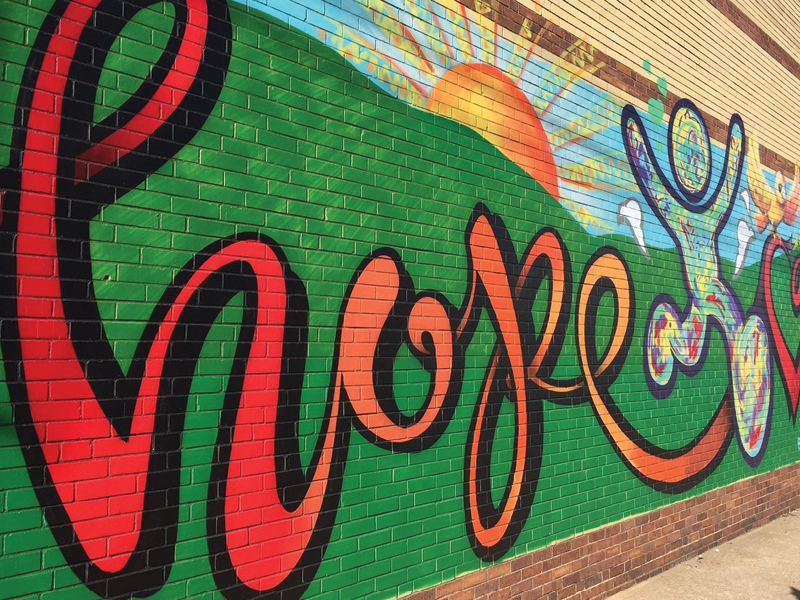
Hope mural, Greenville, By Brandon Adams
In Greenville, Kevin Banks, like many of his peers, left his hometown there for greener pastures after graduating from high school in 1978. But after a successful career with The Walt Disney Company, he moved home to impact the town’s success. As tourism manager and director of the Greenville Municipal Auditorium (GMA) for several years, he made major improvements. The GMA baton was then passed to Micah McBay in 2022 who moved to Greenville with his wife Heather from Rowlett. They were both born in East Texas (Texarkana and Daingerfield) and wanted to contribute to improving the region through the arts.
“The ability to implement and support the arts here in our community is a key reason we are here,” Micah says. “We both believe the arts are vital to a growing community and will continue to support them in all forms here in Greenville.”
Running the GMA helps ensure the community has a solid centerpiece for entertainment and the arts. In recent years improvements include adding free arts programs to the annual GMA calendar for local school students, starting the Greenville Theatre Works, working with local citizens to launch a community choir and a community band, and supporting local arts programs at the library and here at the GMA.
Micah worked with Greenville City Council to coordinate a $5 million renovation to the GMA that takes place next year and upgrades all of its tech systems.
Heather serves as president of the Creative Arts Community in Greenville, which is the non-profit organization that houses Greenville Theatre Works, Greenville Harmony Chorus, and Greenville Community Band. They are adding a fourth arm to that organization to coordinate piano-related events and concerts at the GMA — including two piano competitions scheduled for 2025 and 2026.
“Lots of good things happening in the arts here,” Micah says. “Over the past [few] years, the GMA continues to grow and provide high quality entertainment to our region. This year alone (2024), over 25,000 people attended events at the GMA including concerts from well-known artists like The Oak Ridge Boys to local dance recitals and community theatre. Investing in the arts is an investment in your community because the arts brings in people to stay in your hotels, shop at your stores, and eat at your restaurants. It’s a worthwhile endeavor to support local arts and to invest in their sustainability.”
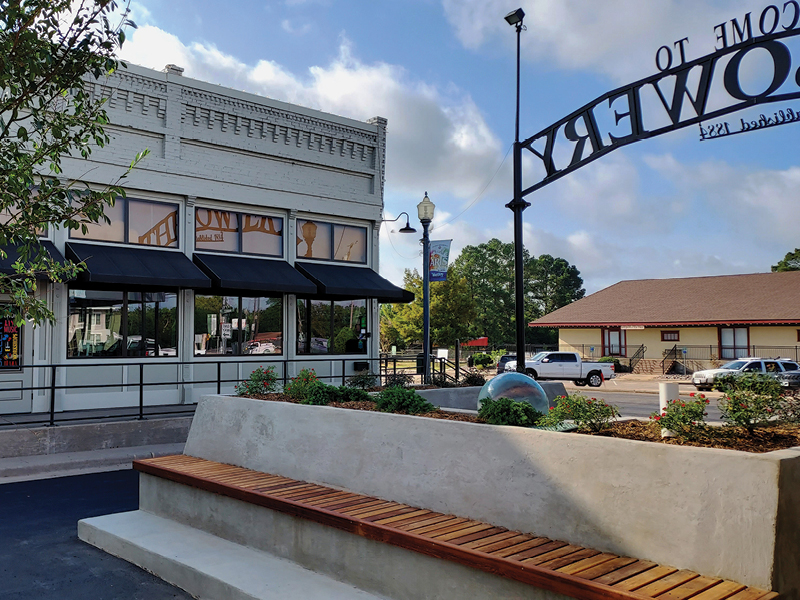
Winnsboro Center for the Arts, Photo by Jim Willis
Mary White and her team have a similar focus on creative endeavors in much smaller Winnsboro. Born and raised in Winnsboro, she moved on to have a successful 30-year biomedical career on the East Coast. She is classically trained in piano and also enjoys playing jazz. She moved back home in 2014 and became active in the Winnsboro Center for the Arts (WCA), founded in 2001 to provide more cultural and artistic opportunities and to make them accessible to everyone.
The multi-disciplinary arts center serves communities throughout Northeast Texas through educational programming, cultural experiences, and entertainment. A new 10,000 square foot, two-story arts education building is now under construction next to the existing art center in the Bowery Pedestrian Park in downtown Winnsboro. Following that, is the construction of a new state-of-the-art performance hall.
White says it takes many people with diverse backgrounds to keep the momentum going.
“I grew up in Winnsboro before our society had become so mobile,” she says. “Everyone I knew was born and raised in Texas, and a majority were from around Winnsboro. When a family moved in from out of state, it was big news. Now, there are people who have moved in from all over the country, if not from around the world.
“Winnsboro is such a special community because people (old-timers and newcomers alike) tend to respect and value its rich history and traditions while embracing its potential for what it can become. That means that people from diverse backgrounds can find common ground to work together for the good of the community. That is so important. We move too fast for some and too slowly for others, but we do work together to address the needs of our changing times.”
Retired Dallas businesswoman Mary Spencer is on the WCA board of directors and supports the town in many other ways. She purchased a second home on nearby Lake Cypress Springs in 2007.
“After retiring, the weekends became weeks, giving me time to discover the wonderful little town of Winnsboro and to observe and be a part of the many changes over the years,” she says. “Shopping and dining out in the various boutiques and restaurants with my new friends led me to Winnsboro Center for the Arts, where I met some of the most talented, creative, and fun folks ever. I quickly discovered that WCA provided everything that the cultural arts of Dallas had previously done [for me] and I so enjoyed the wide variety of art classes, the shows, and the music, and theater. WCA is truly a diamond amongst the hay bales of picturesque East Texas.”
Winnsboro Center for the Arts, Photo by Jim Willis
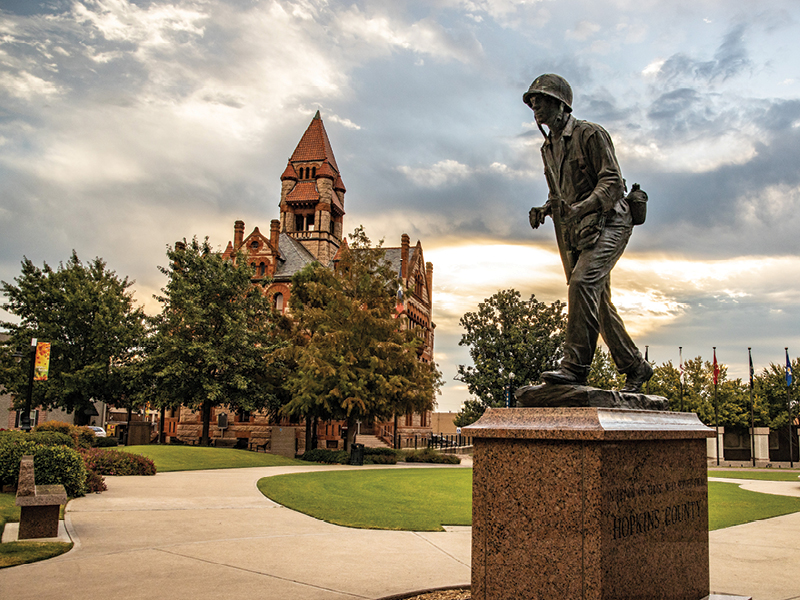
Sulphur Springs has completely renovated their downtown area in the past 25 years. Joey Baker, Director of Aviation and Tourism Departments spoke, to County Line in 2011 when they were in the early phases of making improvements to the city’s courthouse plaza and their municipal airport that would draw more tourism and other industries to the area.

Their well-planned strategies were very successful as is evident by the constant stream of foot traffic these last few years as visitors and residents alike enjoy the splash pad, outstanding veterans park, outdoor restaurants, seasonal concerts, boutique shopping, and ongoing activities throughout the year, all with a backdrop of the award-winning Romanesque Revival courthouse. People also enjoy the amusing see-through bathrooms, sometimes driving many miles out of their way for the experience.
Many “movers and shakers” in other communities in the region are making positive change happen. Often one big renovation can lead to the rest of the town working harder to spruce things up.
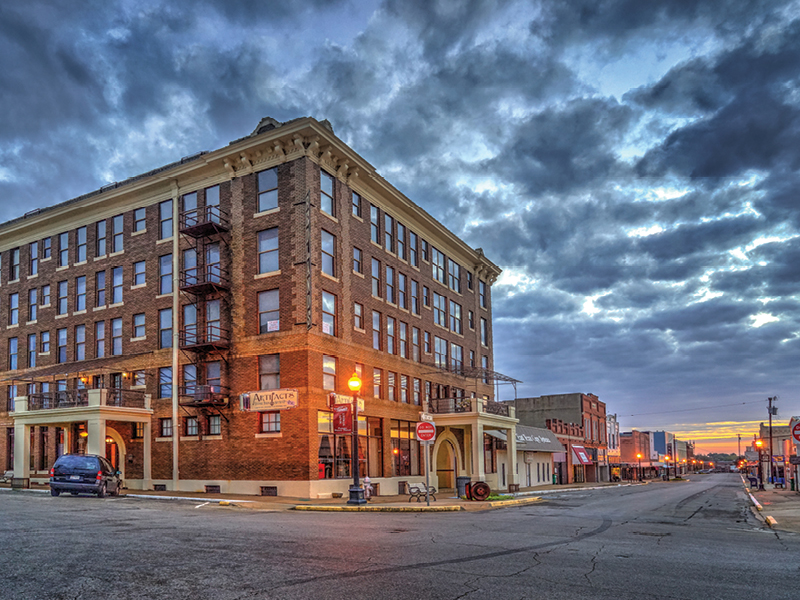
Redlands Hotel, Downtown Palestine, Photo by Dave Shultz
Such is the case in Palestine after Jean Mollard followed her husband Norman to his hometown in 1976, coming from Houston. With a special interest in historic buildings and restoration versus bulldozing, they purchased what she calls “the most dilapidated and seemingly desperate project in town.”
Today it is the beautiful Redlands Hotel with overnight suites, a fine dining restaurant, cozy bar, gift shop, conference room, library, and art gallery. Other buildings in Palestine are following suit.
The people who make a community what it is, come from diverse backgrounds, no matter how long they or their ancestors have been there. The value of a place is measured by its history, its present, and future. From the American Indians who first roamed this land of the Upper East Side of Texas, to the influx of immigrants over hundreds of years that continue today, a blending of shared cultures, history, and creative new ideas keeps the people of the region appreciating and preserving its natural beauty and small town vibe.
Get to know the communities in the Upper East Side of Texas in the County Line archives and in the book, Upper East Side of Texas: Small Towns & Cultural Districts available in shops around the region and on Amazon. ♠

