
By P.A. Geddie
A respected friend pointed out to me this morning that a part of something I created and shared with him could have been better. I knew instantly what he was referring to as I knew it wasn’t a perfect fit when I sent it and I’m not surprised his keen eye caught it.
I’m glad the new year started with a little “scratch on the wall.” It reminds me that I’ve reached a point in my life where I feel okay about imperfection most of the time. My focus immediately shifted from a tiny grain of regret to a feeling of gratitude for having this amazing like-minded friend.
“”Wabi-sabi,” I replied to him, and felt the peace that comes in knowing the beauty of imperfection to my core.
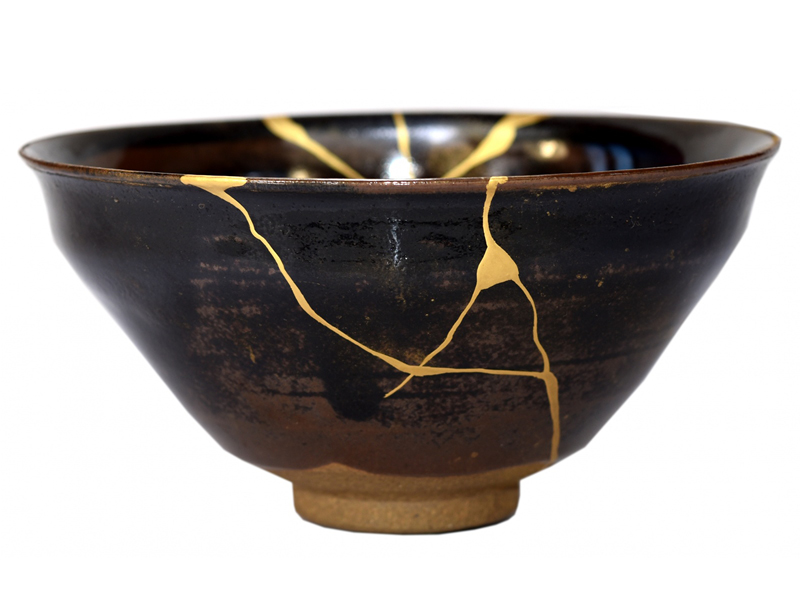
Wabi-sabi is a Japanese term meaning “acceptance of imperfections as both meaningful and beautiful.” An example of wabi-sabi is the art of kintsugi, a form of repairing cracked or broken pottery with a gold inlay. Instead of throwing a broken piece away, it is restored. The fault is not hidden, it is highlighted, becoming part of both the history and the current presence of the piece. Instead of a breakage being the end of something, it is the celebration of what was, and what now is.
Another example of wabi-sabi for me is one of my favorite scenes in a movie called The Lucky One. Piano-playing Logan convinces shy young Ben, a child just learning to play a violin, to perform with him in front of an audience. When Ben hits a screeching bad note, members of the audience are seen grimacing, while Logan gives Ben a smiling look that says “that was an unexpected, but beautiful surprise,” which spurs Ben to accept the little “oops” and keep going.
Finding inner peace among all the mistakes I regularly make and in the splash zone of others’ mistakes is challenging but I am hopeful that much of my prolonged gut wrenching days are in the rearview mirror, at least for those in the emotional wading pool.
There was a time when even the slightest imperfection would have stirred an unhealthy focus on one negative thing instead of the 90 percent of a situation that was really good. Finding my balance when in the midst of inner conflict is something that could sometimes take hours, sometimes days to shake off, and depending on how deep the wound, sometimes much longer.
The biggest wound I’ve felt in recent years I held on to so tightly, for so long, that it made me ill. Mistakes were made by several people that led to a tragic situation. Although I followed “procedures” to hold people accountable, they never accepted responsibility or tried to make amends. So I thought I needed to do more to get them to do that and to help make sure what happened to me, didn’t happen to others. A lawsuit was suggested but innocent people would be hurt. And I was not prepared for the emotional stress of legal court proceedings.
I thought the negative emotions would stay with me until I found a way to “fix” things. Normally fairly successful at navigating through what imperfection life throws at me, this situation had me feeling helpless and trapped for a long time. Part of that I came to understand, was that I was beating myself up for not having made better decisions, especially when it came to trusting others to do what was expected of them.
When the distress began affecting my physical health, I finally reached out to someone who taught me how to let go of those gut wrenching emotions without having to fix anything.
“Serenity comes when you trade expectations for acceptance.”
Gautama Buddha
I accepted that my expectations were shattered. I accepted that I could not go back in time and change the outcome. I accepted that I made the best decisions I could possibly make with the information I had at the time. I accepted that people let me down. I accepted that those people were never going to take responsibility for the harm they caused and many of them were no longer even in the picture. I accepted that in my current wounded state, I couldn’t be helpful to anyone else. I accepted that my priority was to take care of myself and heal. It was helpful to me to accept that I could let go of the pain by releasing the need to “do something now” and if I still feel the need down the road, help others from a more peaceful place.
I am just now starting to see the “beauty” in this particular imperfection — that is coming into view as I focus more and more on a bigger perspective. The more good I see on the outskirts of the tragedy, the smaller the crack is becoming. The crack will always be there but seen as part of the whole piece it’s not so ugly anymore.
Life is messy. I know that I’ll be tested again and again and I hope I embrace wabi-sabi quickly for most of the little mistakes that might rattle me. I hope I can give the big conflicts a respectable amount of grieving time and then return to my peace, where I am most good to the world.

